
Sabih Khan is the chief operating officer at Apple, but while he has been in the role for less than a year, his tenure at Apple has lasted for decades. Here’s all you need to know about the guy in charge of Apple’s operations.
When it comes to Apple executives, Sabih Khan is probably one of the lesser-known personalities. While CEO Tim Cook is famous, as are other managerial members like Craig Federighi and predecessor Jeff Williams, Khan has been less prominent in the company so far.
That is in part due to having only been COO for the organization for a very short period of time compared to his executive peers. As he spends more time in the prominent role, he will become more well-known outside of the company, but it will take a while for him to become more established.
However, while he hasn’t spent a long time at the top of the corporate food chain, he has been with Apple for quite a few years. He is one of the veteran members of staff who have watched the company grow in leaps and bounds during his time there.
This is the story of how Khan went from India to iPhone.
College and pre-Apple career
Born in 1966, Sabih Khan was originally raised in Moradabad in Uttar Pradesh, India. While he was in India for his formative years, up until the fifth grade, that didn’t last for long.
He moved with his family to Singapore at the age of ten, where he completed his pre-college schooling. The change brought Khan to a city with trade in its heart, which also allowed him to embrace a multicultural society.
His education continued in the United States, securing bachelor’s degrees in Economics and Mechanical Engineering from Tufts University in Massachusetts. After graduating in 1988, he moved to pursue further studies at the Rensselaer Polytechnic Institute in Troy, New York.
He would eventually earn himself a master’s degree in Mechanical Engineering.
Eventually, Khan moved into the world of work, and like many other long-term Apple employees, it’s not an extensive list of companies. His first, and only, role between education and Apple was at GE Plastics.
At GE Plastics, he was an applications development engineer and key account technical leader, which exposed him to advanced material manufacturing processes. This was a good formative base before he moved over to Apple, helping him understand manufacturing before working for such a large-scale producer.
The start of three decades
Khan started his tenure at Apple in 1995, joining its procurement team. This was a role that required Khan and other team members to deal with acquiring components and materials to manufacture Apple’s products.
Given his work at GE Plastics would’ve involved dealing with suppliers, manufacturers, and clients, this role was entirely within Khan’s wheelhouse.
This was in the pre-iPhone era at Apple, when the Power Macintosh was the main product line for the company. It was also around the time co-founder Steve Jobs returned to Apple and became the interim CEO.
This was a turbulent time for the company, with Jobs making significant changes that fundamentally changed the way that Apple functioned and built products for consumers and business users.
Within just a few years of being at the company, his team had to deal with sourcing for a new groundbreaking product that Apple would bring out in 1998. The iMac was a major success for the struggling company.
This success was then followed by other major products in the history of the company, such as the PowerBook G3, the Apple Cinema Display, and the iPod in 2001. In each case, Khan and his colleagues used their experience to secure the materials and hardware needed for those products.
Apple describes Khan as having “played an important role in delivering each of Apple’s innovative products to market.”
Production growth and control
While current CEO Tim Cook is viewed as one of the driving forces behind Apple’s massive supply chain, Khan was also part of the same story. Indeed, a lot of it could be put down to Khan’s work in procurement that helped lead to other things.
From 2007 to 2019, Khan was one of the people who helped grow and considerably expand the supply chain in general. Working to make deals with suppliers and contract manufacturers, Khan was able to help Apple secure an operation that could easily build products at scale.
These long-term agreements weren’t just to secure supplies, but also to maintain a high standard of construction throughout the supply chain itself. This included conducting audits of factories to ensure that they were following regulations while also working to produce high-quality components.
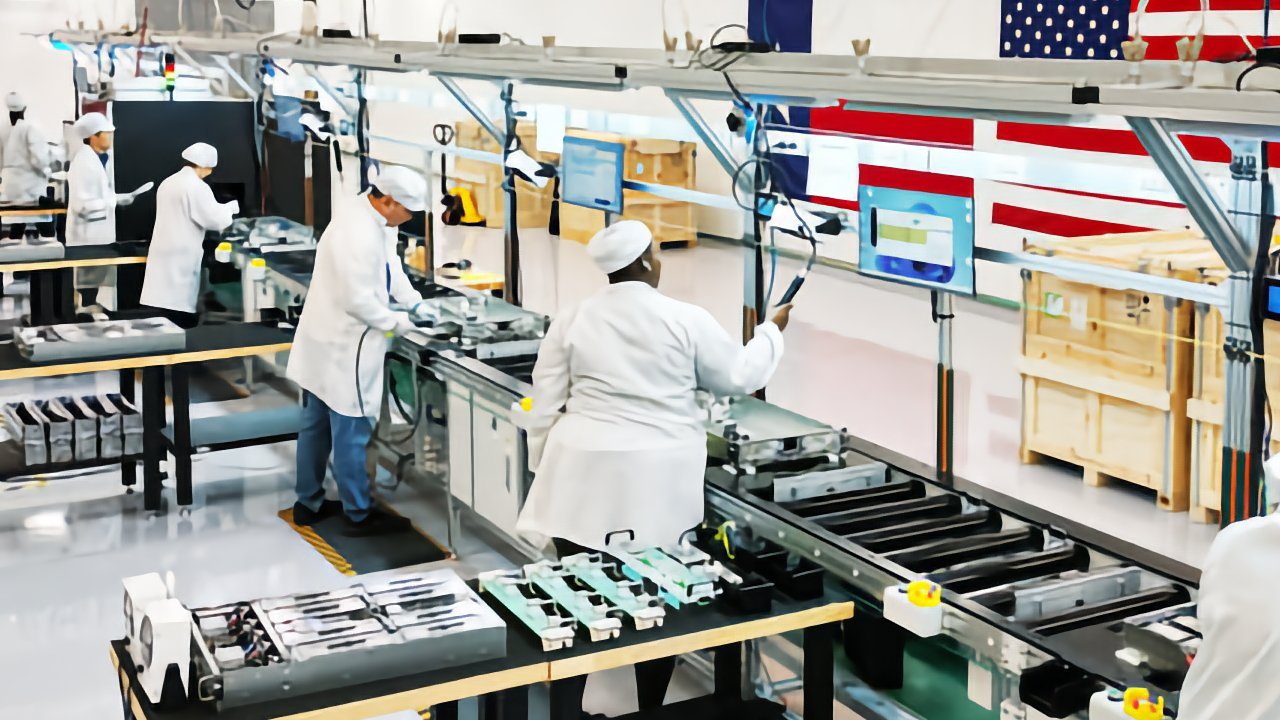
A Houston factory that Apple has invested in — image credit: Apple
This manifested more publicly as regular Supplier Responsibility Reports, which often involved hundreds of audits across the supply chain. For example, in 2013, there were 393 audits in total, up 72 percent from the previous year.
The audits uncovered events that Apple was keen to correct before they became a major problem. Where possible, it would create measures to protect workers from being underage, as well as minimizing exploitation of workers.
At a time when consumers were getting concerned about where their products came from, the audits were a way for Apple to show it cared about its distributed workforce, as well as the law.
His work in the field and team leadership caught the eye of his superiors, especially due to how it helped grow the company even more. It inevitably led to more promotional prospects. This included leading the operations team before ascending to the executive level.
Executive material
On June 27, 2019, Apple announced that Khan was being promoted to Senior Vice President of Operations. This was an executive role where he would be put in charge of more of Apple’s overall operation.
He reported to then-COO Jeff Williams before becoming SVP, and he continued to do so afterwards.
At the time, Cook described Khan as having led Apple’s operations team “with heart,” managing a global team that treated workers with dignity and respect, while also helping to protect the environment.
The environmental comment wasn’t a throwaway bit for the press release. That team had developed a new alloy enabling the MacBook Air and Mac mini to use 100% recycled aluminum.
The operations team also spearheaded supplier partnerships to make manufacturing greener in general.
Williams said he had worked with Khan for more than 20 years, insisting that there wasn’t a more talented operations executive anywhere on the planet.
“He is a world-class leader and collaborator, and I have no doubt that he will be the best leader of the Ops team in Apple’s history.”
Under his new SVP role, Khan was responsible for “ensuring product quality and overseeing planning, procurement, manufacturing, logistics, and product fulfillment functions,” Apple said in the press release.
This was a role that, overall, was similar to the work carried out by Tim Cook in the years before he became CEO.
While he had a new seat at the table, it wasn’t long before Khan would be tested in his new role.
Global manufacturing issues
Within his first year as SVP of Operations, Khan had to deal with the massive problem of COVID-19. With the sheer size of Apple’s operation, that meant tens of thousands of people working for supply chain partners who had their lives and work for Apple affected by the pandemic.
As revealed during the annual Supplier Responsibility Progress report in May 2020, Khan helped work with suppliers to develop and execute a plan that maintained production as much as possible. All while keeping the health of its employees in mind.
This included mandating health screenings, supplying and requiring the use of personal protective equipment, and enforcing social distancing. This latter point, decreasing density within workspaces, was difficult for a supply chain that frequently relied on in-person working, especially for the armies of assemblers.
Apple mitigated this problem by having suppliers reconfigure and redesign floor plans at factories wherever needed to allow for social distancing. It also implemented more flexible work hours to minimize the number of people at a location, while still maintaining employment and production levels.
The company also shared its workplace health and safety plans with others in the industry.
The effort worked for the most part. By using techniques like closed-loop production, Apple’s supply chain partners were able to stay open and avoid trouble, despite dealing with overzealous and overly stringent local policies at some locations.
As the pandemic continued, the facilities were put under strain, despite the best efforts of Apple’s operations teams.
The worst flare-ups happened during some factory riots.
One factory in Shanghai rioted in May 2022 after employees were frustrated by increased restrictions during lockdown, implemented by local authorities.
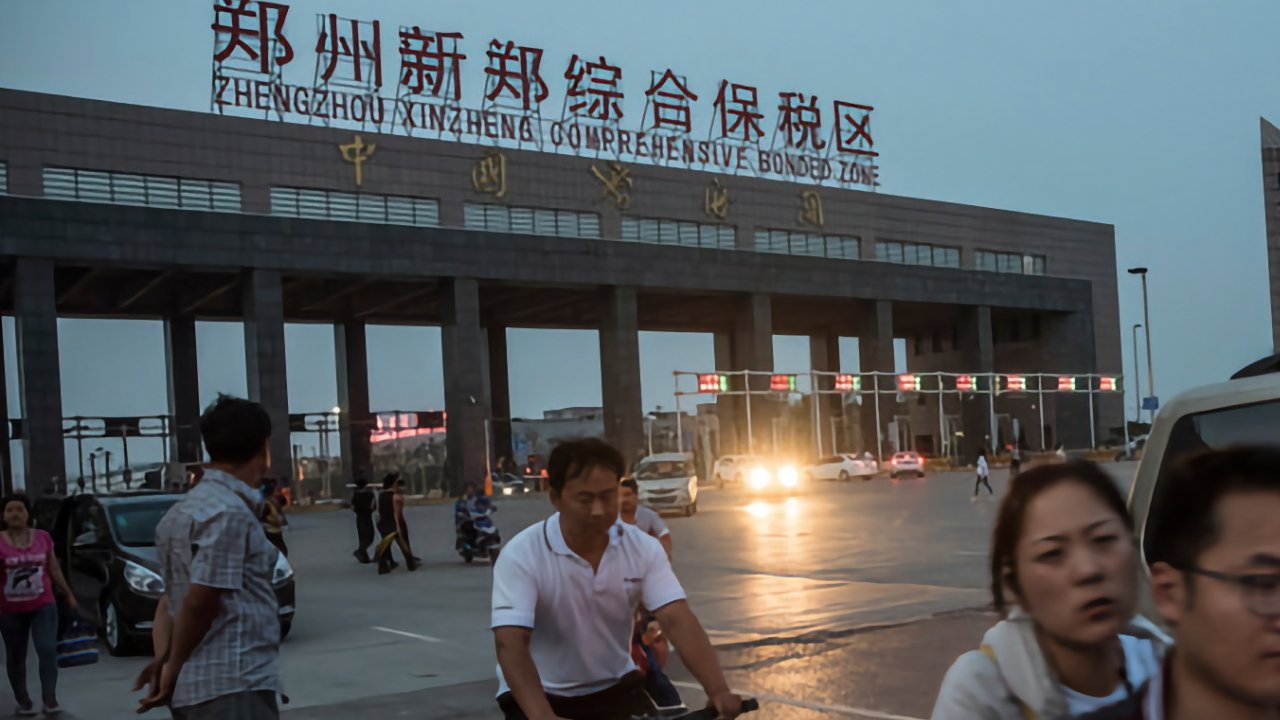
Outside Foxconn Zhengzhou
Another occurred in November 2022, with Foxconn’s main iPhone factory in Zhengzhou becoming a hotspot due to complaints over pay and conditions.
In the years since, Khan’s team has worked with the effects of the pandemic and other world-impacting events in mind, gradually redefining the supply chain itself.
While it has been a mainly China-centric program, under Khan’s watch, Apple spread out its production into other regions. It was a plan to decentralize production by having multiple manufacturing hubs, ensuring Apple could still make products despite any future interruptions.
This also included a return to India for Khan. Apple’s second major production hub was, over a couple of years and thanks to production incentives, built in the country.
In its current state, Apple now has the ability to procure iPhones for various markets from India or China, depending on which is more practical.
This became unexpectedly useful during the U.S.-China trade war, as well as the later global tariff changes, both under the presidencies of Donald Trump. In the latter case, and facing excessively high tariffs affecting China, Apple shifted the sourcing of iPhones for the U.S. market to mostly stem from India.
Chief Operating Officer
In July 2025, Khan’s work in operations was rewarded with another promotion, following a prominent retirement. Apple had announced that Jeff Williams was retiring from his position of Chief Operating Officer after 15 years and would leave later in the year.
Khan was named to be Williams’ successor as COO, which he took in July. Williams managed design at Apple for a few more months, officially retiring in November 2025.
As COO, Khan reports directly to Cook, but his remit as COO isn’t as expansive as under Williams’ control, with watchOS software development and health software engineering teams being managed under the SVP of Software Engineering, Craig Federighi. Similar moves were also made with design, with John Ternus the current executive sponsor for that work.
Khan’s work did expand compared to his previous position, however. This included supervision of AppleCare, accessibility, environmental, and social initiatives.
There was also more oversight of the Greater China team, an important part of the business for both manufacturing and sales.
Within months of taking his seat, Khan held a meeting with China’s international trade negotiator. The meeting was to continue the courtship by Williams of Apple’s political interests, through visits to the country.
The details of his first talk with China as COO are not well documented, but it did include assurances that Apple was committed to long-term development in the country. This also includes increases in investments for research and social welfare.
For the most part, this was a case of Khan trying to keep China happy despite Apple’s seeming shift away from the country for manufacturing. All because of increased expansion in India.
While China is a big issue for Apple, another one lies closer to home. The Trump Administration has repeatedly expressed a need for Apple to bring manufacturing jobs to the United States.
As COO, this was another topic that Khan has to manage, aside from Tim Cook’s usual dealings with Trump directly.
In response to the calls, Apple has made multiple announcements about investments into the United States, enhancing its local manufacturing with hundreds of billions of dollars.
COO, but probably not CEO
As COO, Khan has effectively become the heir-apparent for the role of CEO if something unexpected were to happen to Cook.
However, despite the controlling position, it seems unlikely that Khan will actually become CEO. He may become an interim CEO, as Cook did for Steve Jobs, but full-time is another matter.
The first problem is a lack of public presence, which other major executives on the team have earned over time. As a figurehead, Khan will earn this gradually, but it will take years and many public appearances.
There’s also the topic of age, and being just a few years younger than Cook means he won’t be viewed as a long-term CEO choice. Especially considering the tenures of Cook and Jobs at the helm.
Current opinion is that John Ternus is probably the frontrunner for Apple’s long-term CEO succession plans.
While Khan isn’t necessarily going to become the CEO of Apple someday, he will still have a hand in shaping the company for the future. Albeit not in the captain’s chair.
Trending Products

Apple iPhone 12 Mini – Parent...
Apple iPhone SE 2nd Gen – Par...

Apple iPhone 7 32GB Unlocked AT&...
Apple iPhone 14 – Parent (Ren...

Apple iPhone 12 Pro Max, PARENT (Re...
Apple iPhone 8 64GB Unlocked –...
Apple iPhone 15 Plus 5G (512GB, 6GB...
Apple iPhone 14 Pro (Renewed)

Apple iPhone 15 Pro Max – Par...
