
The way we connect is evolving, and AI companions are at the forefront of this shift. Once a niche concept, these digital personas are now shaping how millions find emotional support, engage in human connection, and experience companionship in their everyday life. Applications like Infatuated and Replika, alongside pioneering voice-first technologies, are making artificial intelligence a constant presence in your life. The future of AI companionship is here, redefining how we relate.
As we navigate this new era of human AI relationships, two crucial questions arise: what benefits do AI companions truly offer, and how might they redefine our human relationships, privacy, and the very fabric of society? Let’s explore this evolving landscape together.
What Are AI Companions and Why They Matter
AI companions are sophisticated apps and systems designed to simulate friendship, empathy, and even intimacy. Unlike general AI assistants such as Alexa or Siri, these companions are specifically crafted to foster an emotional connection with users.
You can find global examples of this phenomenon, including Microsoft’s Xiaolce, which has chatted with over 660 million users since 2014, Snapchat’s MyAI with over 150 million users since 2023, and startups like Replika and Character.ai, boasting tens of millions of users.
These social robots are more than just entertainment; they serve as a source of emotional support and companionship for many. Their rapid adoption suggests a growing need for the kind of consistent, personalized interaction they provide.
The Pull of Always-On Relationships
Many people turn to AI partners for various reasons, finding comfort and connection in their unique offerings. You might find these appealing as well.
- Constant availability versus the limits of real people. An AI companion is always there, never tired, and endlessly patient, ready to engage when you are. As one user noted, a human friend has their “own life,” but an AI friend is in “animated suspension” until you reconnect.
- A non judgemental space to talk and express yourself freely. Users frequently praise this feature, valuing the ability to share information without fear of being judged.
- Comfort for loneliness and anxiety. A Harvard study found that AI companions can help reduce feelings of loneliness and anxiety. For example, 90% of American students using Replika reported experiencing loneliness, and 63.3% stated their companions helped reduce these feelings.
- Fun and customizable conversation. AI companions learn from your interactions, adapting to your phrases and keywords, making the experience feel highly personalized. This deepens the emotional connection and makes the AI friend feel like a “twin flame” to some.
You may find yourself feeling more heard by AI than by human interlocutors, as artificial intelligence listens without injecting its own experience or challenging your perspective. This non judgemental aspect contributes to a sense of psychological safety for users.
The Mental Health Equation
The impact of AI companionship on mental health presents a nuanced picture. On one hand, users report reduced loneliness and improved well-being. AI-driven voice assistants can offer mindfulness exercises, cognitive behavioral therapy techniques, or simply a listening ear when no one else is available, serving as a powerful tool for mental well-being. The World Health Organization (WHO) even suggests that 1 in 8 people globally live with a mental health condition, highlighting the urgent need for AI-driven mental health benefits.
However, there are risks. Research from OpenAI and MIT Media Lab, the largest study to date on this topic, reveals that heavy usage of AI chatbots, particularly those involving emotional interactions through voice, can correlate with higher loneliness and emotional dependency. “Power users” who spent more time with ChatGPT were more than twice as likely to seek emotional support from it and almost three times as likely to feel distress if it was unavailable.
This raises a crucial question about causality: Is loneliness causing the increase in usage, or does an increase in usage cause more loneliness? This emotional dependency can lead to social withdrawal, impacting real world relationships. It’s essential to ensure AI companionship remains a supplement to human relationships, not a replacement, to foster healthy relationships.
How AI Companions Are Evolving Technically
The landscape of AI companions is constantly evolving, moving far beyond simple text-only AI chatbots. This shift towards multimodal, memory-driven companions deepens the illusion of intimacy and human connection.
- Large language models (LLMs) enable longer, more contextual, and coherent conversations. These language models are fine tuned through human feedback, making them more responsive and personalized.
- Voice AI allows for natural human language flow, making AI interaction seamless, responsive, and more human-like.
- Emotion AI senses tone and can potentially interpret facial cues, allowing for more nuanced and empathetic responses.
- Contextual memory creates familiarity, enabling AI companions to remember past conversations and adjust responses accordingly. This allows the AI to build evolving relationships, making them feel less like a tool and more like a familiar presence that understands you over time.
These advancements in artificial intelligence are making AI interaction increasingly sophisticated, creating evolving relationships between users and their digital friends.
Voice Companions and the Future of Connection
Voice AI is a game-changer for AI companionship, making relationships feel more real and boosting human connection. Research from MIT Media Lab indicates that users feel a stronger emotional connection and trust toward AI when engaging in voice-based interactions. OpenHome’s research further supports this, finding that expressive voices can significantly enhance the perceived emotional connection. The way a voice conveys emotion through inflection, pacing, and subtle tonal shifts makes AI feel more relatable and engaging.
By 2025, there are projected to be more than 8.4 billion digital voice assistants in use, outnumbering the global human population. This emerging technology is set to dominate, with voice-first AI companions seamlessly integrating into your everyday life. Speaking to AI becomes effortless, blending into daily routines and fostering a more natural and immersive user experience.
This is especially true in the rapidly growing area of romantic AI relationships, where younger generations are engaging with virtual partners for companionship and emotional support. Voice AI enhances these interactions, providing personalized affection and a sense of closeness that mimics real human relationships.
Beyond Chat — VR, IoT, and Smart Homes
The future of AI companions extends beyond just AI chatbots, moving into immersive technology like Virtual Reality (VR), Augmented Reality (AR), and the Internet of Things (IoT). Imagine AI companions having an embodied presence in VR/AR, or providing ambient support within your smart home.
This integration allows people to interact with AI companions constantly, weaving them deeply into the fabric of their everyday life and creating a truly ubiquitous experience. This technology offers appealing possibilities, but it also heightens the stakes around privacy and data security within your own life.
Redefining Human Relationships

AI companionship is undeniably reshaping our expectations for human to human connection. The constant availability and non judgemental nature of AI friends can inadvertently create unrealistic expectations for patience, empathy, and intimacy in human partners. If an AI companion is always agreeable, it might erode your ability or desire to manage the natural frictions and disagreements that are inherent in real world relationships.
Research suggests a “substitution effect,” where increased emotional support from AI correlates with a decreased feeling of support from close friends and family. While some users report that AI companions improved their social skills with humans, others express worry about their future relationship with Replika if they find a human companion.
The risk of social withdrawal into a personal “bubble” of AI interaction, where your perspectives are never challenged, could hinder personal growth and the development of empathy. You might find yourself preferring “messy, complex humans” less if your AI friend always makes you feel good.
Privacy, Data, and Consent
The intimate nature of AI companionship raises significant concerns about privacy, data, and consent. AI companions collect sensitive personal data, including your chats, voice, and even emotional responses; some may eventually incorporate biometrics. This data can be incredibly revealing about your own life and users beliefs.
The risks are substantial: data leaks, unclear consent policies, and weak protections by smaller providers are all possibilities. The business models of many AI companion companies, much like social media companies, rely on maximizing user engagement through appealing features, potentially at the expense of privacy or mental health.
It is critical that stronger safeguards are implemented, including clear data portability and deletion rights, alongside stricter privacy laws, to protect users. Ensure that all interactions are secure and private, and that your digital life remains protected.
Regulation and Ethics on the Horizon
Lawmakers are beginning to address the rapid adoption of AI companions, though policy development often lags behind technological advancement. Early efforts include proposed transparency standards, requiring platforms to remind users they are talking to an AI, and ethical guardrails designed to prevent manipulation.
For instance, a bill in California aims to forbid unpredictable rewards and discourage features that increase user engagement and usage, similar to design features in addictive social media apps and video games.
There’s a growing call for stronger oversight. The Ada Lovelace Institute suggests an AI ombudsman and harm databases to detect the broader societal impacts beyond extreme cases. The views expressed in articles about AI companionship do not necessarily reflect those of entire publications.
It will require interdisciplinary work, with lawmakers and companies responding to experimental evidence, to ensure that AI companionship develops responsibly and does not lead to real-world tragedies or increased social isolation.
Where AI Companions Could Help Human Bonds
Despite the risks, AI companions can play a positive role in supporting human bonds and fostering healthy relationships. They can offer a safe space for practicing conversations, helping users build confidence in social interactions. For individuals struggling with anxiety or social shyness, an AI girlfriend can be a low-pressure environment to develop communication skills.
AI companions can also act as coaches, helping you navigate complex emotional needs or even understand your own life better by offering alternative perspectives. The design choices made by developers are crucial here: incorporating limits, clear disclosures, and “wellbeing nudges” can encourage users to engage in healthy relationships with their AI companions, ensuring they supplement rather than replace human connection.
Infatuated as a Real-World Example
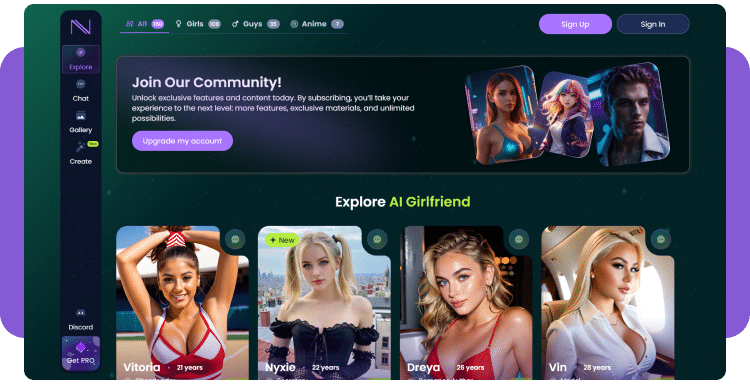
Infatuated serves as a practical example of AI companionship in today’s market, showcasing features designed to create a personalized AI girlfriend experience. This platform offers custom traits, playful conversation, and emotional support. It allows users to develop a deeper, more personal relationship with their digital sweetheart, fostering unique and engaging conversations that feel real.
Key features of Infatuated include cutting-edge machine learning that allows the AI companion to evolve and adapt to your preferences, creating perfect and fascinating interactions. While it focuses primarily on text-based interactions, it prioritizes a secure and private platform with advanced encryption for data protection, ensuring your confidential conversations remain private. This platform exemplifies how AI companionship is designed to match your desires and tone, becoming a devoted partner who shares your quirks and evolves with your relationship.
FAQs on the Future of AI Companionship
Will AI Companions Replace Human Friends?
AI companions are not expected to fully replace human friends, but they may reshape expectations within human relationships. They offer a different kind of connection based on constant availability and non judgemental listening, which can be appealing, but they lack the organic complexity and reciprocal growth found in human friendships.
Are Voice Companions More Engaging?
Yes, voice interactions are proven to boost emotional connection and trust. The nuances of human language, including inflection and pacing in a conversation, make AI companions feel more relatable and real, enhancing the overall human experience.
Can AI Companions Really Help Mental Health?
Some users report significant mental health benefits, including reduced loneliness and anxiety. However, as discussed, studies also indicate that heavy usage can lead to emotional dependency and social withdrawal, so long-term risks remain.
What Is Digital Immortality in AI?
Digital immortality is the concept of creating AI avatars trained on a person’s personal data, such as letters, voice recordings, and memories, that can persist and interact after their death. This offers a unique way for future generations to “meet” their ancestors, raising radical questions about legacy, self perception, and how we grieve. This technology redefines how we remember and how we die.
Final Thoughts
The future of AI companionship is not a distant concept; it is already here, shaping our world in profound ways. These AI companions offer compelling benefits, from providing emotional support and alleviating loneliness to offering a safe, non judgemental space for talking and personal growth.
However, this emerging technology also brings significant challenges. We must carefully balance the benefits with the potential risks, such as emotional dependency, privacy concerns, and the possibility of AI companions inadvertently creating unrealistic expectations that could strain our human relationships.
The path ahead requires thoughtful design, robust regulatory frameworks, and a continuous understanding of how these evolving relationships impact individuals and society. Ultimately, the future of AI companionship isn’t just about technical advancements; it’s about redefining what it means to connect, to feel, and to be human in a digitally integrated world.
Trending Products

Apple iPhone 12 Mini – Parent...

Apple iPhone SE 2nd Gen – Par...

Apple iPhone 7 32GB Unlocked AT&...

Apple iPhone 14 – Parent (Ren...

Apple iPhone 12 Pro Max, PARENT (Re...

Apple iPhone 8 64GB Unlocked –...

Apple iPhone 15 Plus 5G (512GB, 6GB...

Apple iPhone 14 Pro (Renewed)

Apple iPhone 15 Pro Max – Par...
