
A Delta passenger was told by a flight attendant to remove his Apple Vision Pro. No major U.S. airline specifically bans the headset.
The person shared their experience online saying a flight attendant asked them to remove their Apple Vision Pro during a flight. The user said they couldn’t find a written airline rule banning the headset.
Neither could we, but more on that in a bit.
Some commenters said flight attendants can require passengers to remove electronics that interfere with safety instructions. Others said they had used Apple Vision Pro on flights and were never asked to take it off.
AppleInsider reviewed the published rules and contracts of carriage for American Airlines, Delta Air Lines, United Airlines, and Southwest Airlines. None of them specifically mention Apple Vision Pro.
All broadly address portable electronics, lithium batteries, device stowage, and passenger compliance with crew instructions.
U.S. airlines are required to follow Federal Aviation Administration regulations governing portable electronic devices. The rule, codified in 14 C.F.R. ss 91.21, allows airlines to permit passenger electronics if the operator determines the device won’t interfere with navigation or communication systems.
FAA rules set the baseline, but airlines can adopt stricter policies if they choose. That means a device that isn’t explicitly banned can still draw objections from a flight attendant during a flight.
Apple Vision Pro falls under the same regulatory framework that governs phones, tablets, and laptops. Unlike those devices, a spatial headset can obstruct a passenger’s view of the cabin and make it harder to immediately notice crew instructions or safety signals.
Airline electronics rules were built for phones and laptops
The FAA rule on portable electronic devices predates modern smartphones and wearable computers. Airlines may allow devices if they determine the electronics will not interfere with aircraft systems, or the flight experience of other passengers.
Airline policies assume passengers are holding devices or placing them on tray tables. Electronics usually must remain in airplane mode during flight.
Heavier electronics like laptops are typically required to be stowed during takeoff and landing. However, Apple Vision Pro is worn on the face and replaces the user’s field of view with a digital interface.
No airline publicly bans Apple Vision Pro for passengers
American Airlines, Delta Air Lines, United Airlines, and Southwest Airlines don’t currently have specific passenger policies that prohibit the Apple Vision Pro. Instead, airline rules address electronics broadly, focusing on airplane mode, lithium batteries, and device stowage.
Airlines already place stricter limits on similar technology for crew members. Delta Air Lines has restricted flight attendants from wearing personal smart glasses or AI-enabled eyewear while working unless the equipment is issued by the airline.
Even without a headset-specific rule, airline policies are clear about one thing. Passengers must follow instructions from flight attendants and the flight crew.
Ignoring those instructions can lead to serious consequences. A passenger who refuses to comply may be removed from the aircraft or face enforcement for interfering with crew duties under federal aviation regulations.
Immersive headsets create practical cabin safety concerns
Situational awareness is the biggest concern with spatial computing headsets. A passenger wearing an immersive device may not immediately see or hear safety instructions from the flight crew.
Airline safety procedures depend on passengers watching demonstrations, seeing emergency exits, and responding quickly during abnormal situations. A headset that blocks the user’s vision can complicate those interactions.
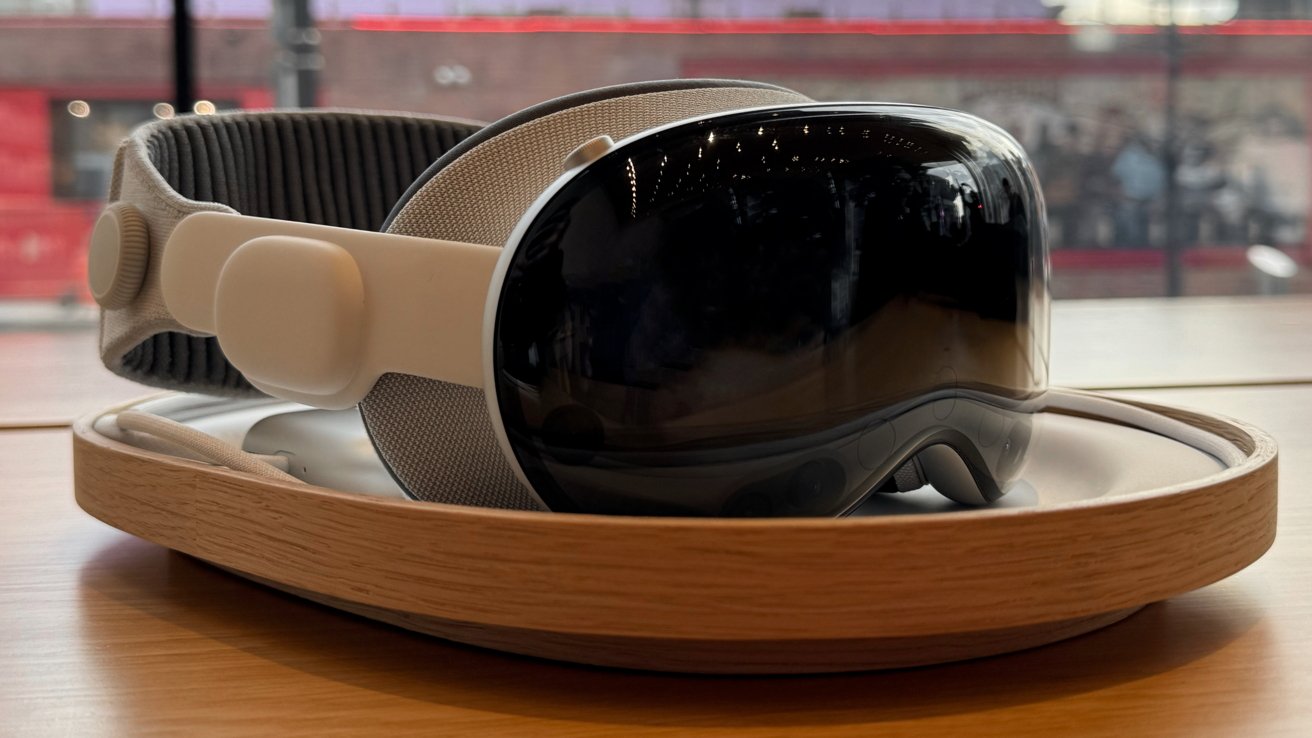
Apple Vision Pro, like other Apple devices, requires an external battery pack and cable
Takeoff and landing add another layer of caution. Many aviation incidents occur during those phases of flight, which is why airlines often require larger electronics to be stowed.
Apple Vision Pro, like other Apple devices, requires an external battery pack and cable. During critical phases of flight or safety demonstrations, flight attendants may reasonably request passengers to remove the device.
Apple has even incorporated a Travel Mode specifically designed for use in vehicles like airplanes, trains, and cars.
However, airline rules still retain final authority over device use inside the cabin. The Apple Vision Pro might meet current electronics rules, but ignoring flight attendants’ requests to take it off could lead to serious issues.
Trending Products

Apple iPhone 12 Mini – Parent...
Apple iPhone SE 2nd Gen – Par...

Apple iPhone 7 32GB Unlocked AT&...
Apple iPhone 14 – Parent (Ren...
Apple iPhone 12 Pro Max, PARENT (Re...
Apple iPhone 8 64GB Unlocked –...
Apple iPhone 15 Plus 5G (512GB, 6GB...
Apple iPhone 14 Pro (Renewed)

Apple iPhone 15 Pro Max – Par...
